

Short answer: Long-duration wheelchair seating should be evaluated across six areas: sitting time, fit, pressure management, positioning, maintenance, and caregiver workflow. Looking at cushion softness alone can miss important factors.
1. Start with the resident’s daily seating routine
Document when the resident sits, for how long, how often they transfer, and what activities happen in the wheelchair. A resident who sits for short periods has a different seating requirement from someone who spends most of the day in the chair.
2. Check wheelchair and cushion fit
- Cushion width and depth should match the wheelchair and user.
- The cushion should sit securely without creating avoidable interference with transfers.
- Seat height and footrest position should be considered together with the cushion.
3. Look beyond “softness”
A very soft surface is not automatically a better pressure-management solution. Facilities should ask how the product supports the pelvis, distributes load, maintains stability, and behaves over the full sitting period.
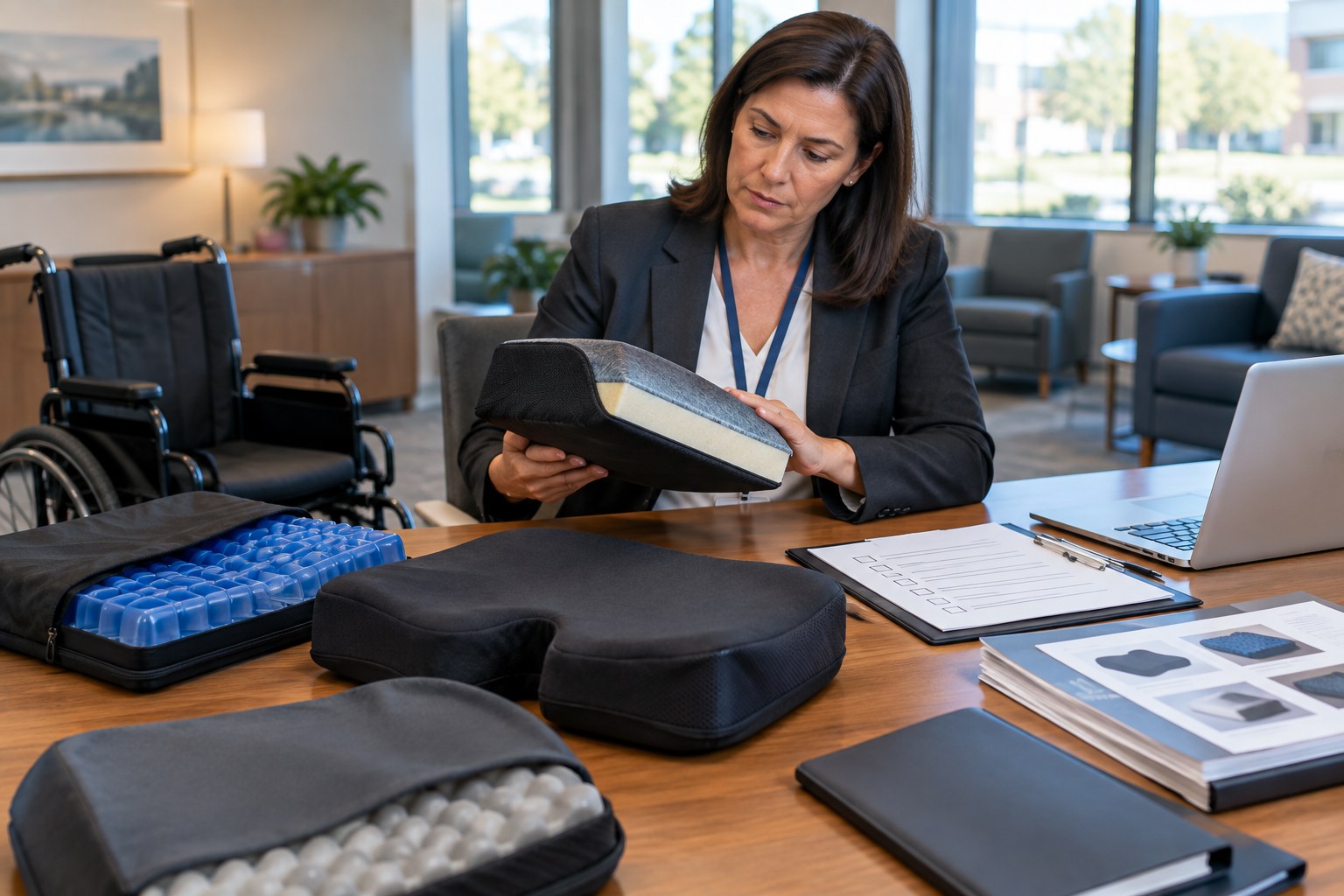
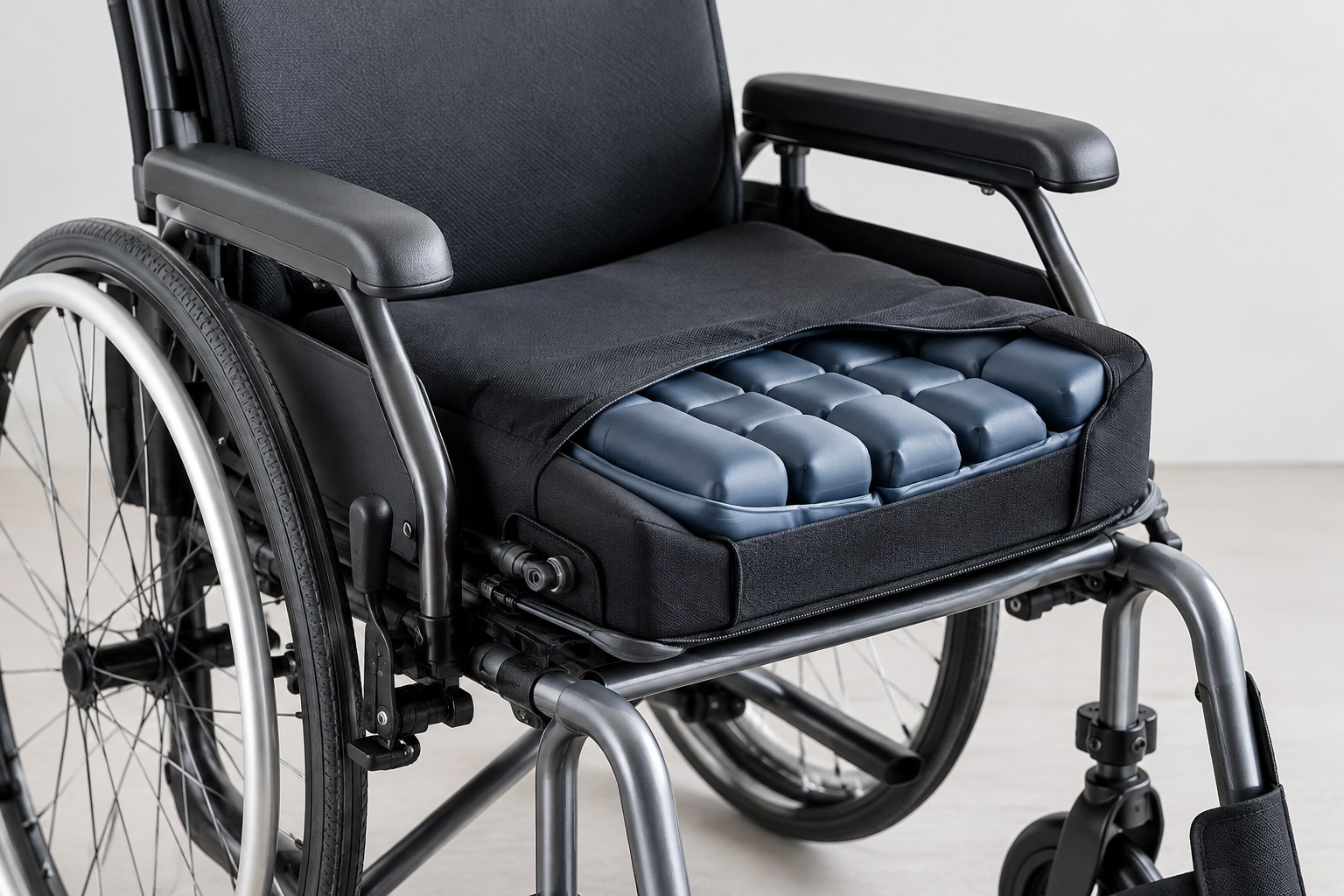
This is why air-cell cushions, foam cushions, gel cushions, and hybrid designs can all have different applications. JFTCARE’s existing air vs. gel vs. foam comparison provides a useful starting point.
4. Include positioning and stability
Pressure management is only one part of seating. If the resident slides, leans, or repeatedly changes position because the seating surface is unstable, the facility should review the complete seating system.
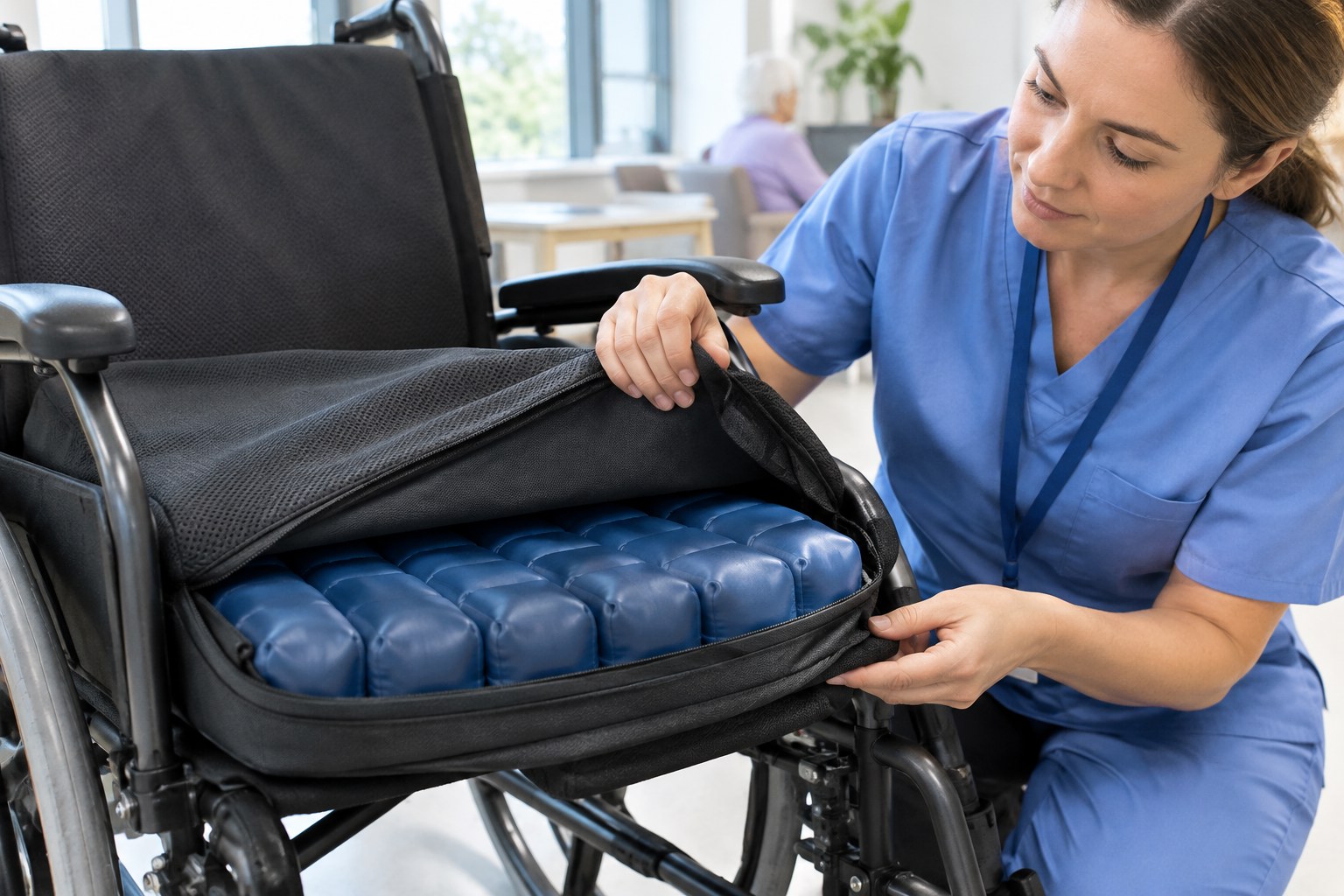
5. Build maintenance into the buying decision
| Question | Why it matters |
|---|---|
| How is the cushion cleaned? | Daily and periodic cleaning must fit facility routines. |
| Does it require inflation checks? | Staff need a simple inspection process. |
| What happens if a component fails? | Downtime can affect resident seating plans. |
| Are covers replaceable? | Useful for high-frequency institutional use. |
6. Create a facility-level seating checklist
- Resident profile and daily sitting duration
- Wheelchair dimensions and configuration
- Positioning and transfer requirements
- Pressure-management requirements
- Cleaning and inspection routine
- Replacement and supplier support
What should procurement teams document?
For repeat purchases, record the cushion model, dimensions, material, support technology, weight range or capacity where specified by the manufacturer, accessories, cleaning method, warranty, and supplier contact.
Key takeaway
Long-duration seating is a system decision. A useful cushion must fit the resident, wheelchair, caregiver routine, and facility procurement process at the same time.
FAQ
How often should staff reassess wheelchair seating?
The appropriate interval depends on the resident and facility protocol. Reassessment is especially relevant after changes in mobility, posture, skin condition, body weight, or wheelchair configuration.

Leave a Reply