
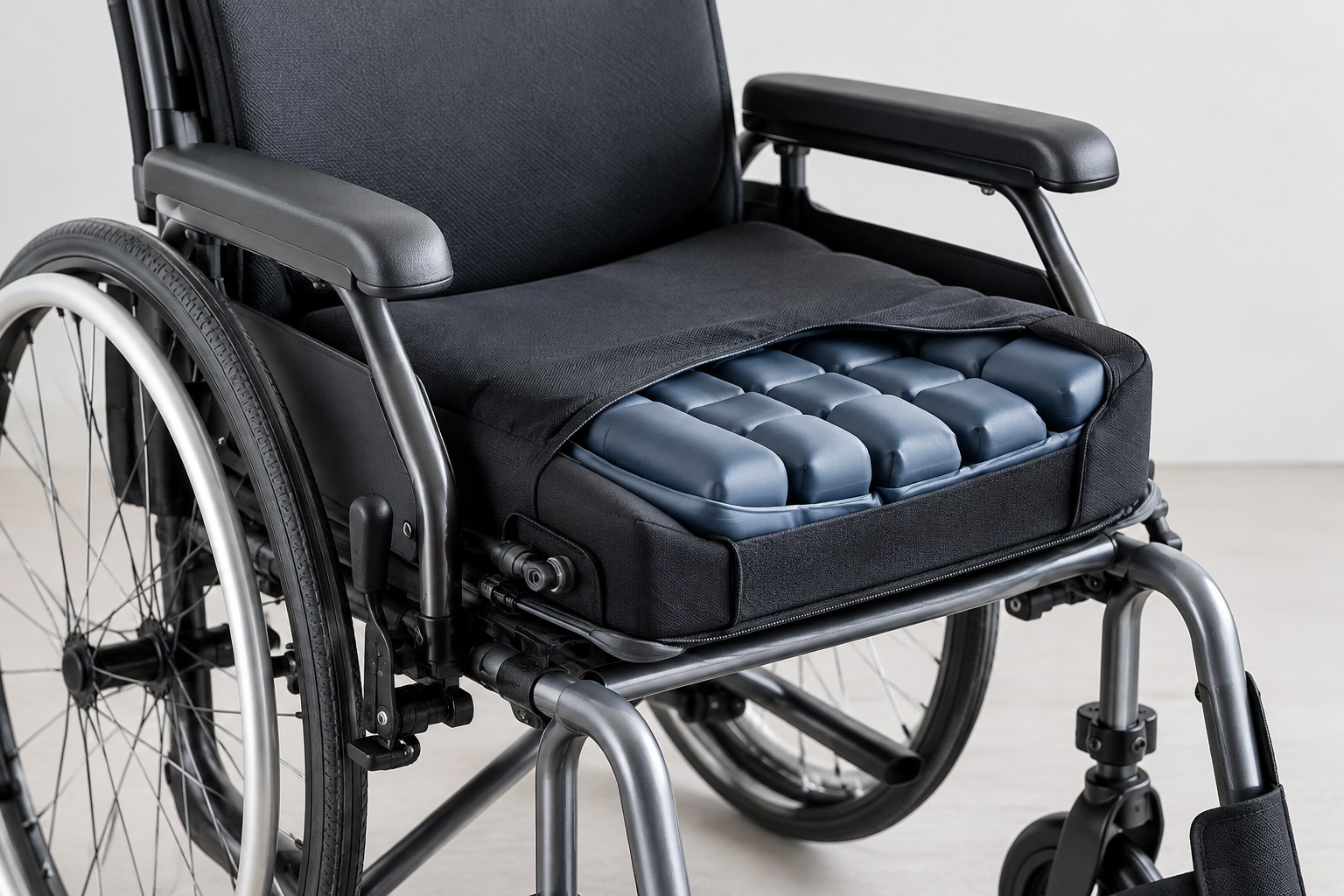
Short answer: Senior living facilities should compare air-cell wheelchair cushions by cell design, dimensions, adjustability, material durability, cover construction, maintenance, documentation and supplier support—not by unit price alone.
1. Define the application first
Clarify whether the cushion is for daily long-duration seating, occasional mobility, rehabilitation, facility-wide standardization or a specific resident requirement.
2. Compare the air-cell structure
Ask how many cells the design uses, how the cells are arranged, how air is distributed and whether the configuration supports the intended seating application. For example, JFTCARE’s SJ03-F-2 is designed with a 5 × 4 arrangement of 20 air cells.
3. Check materials and durability
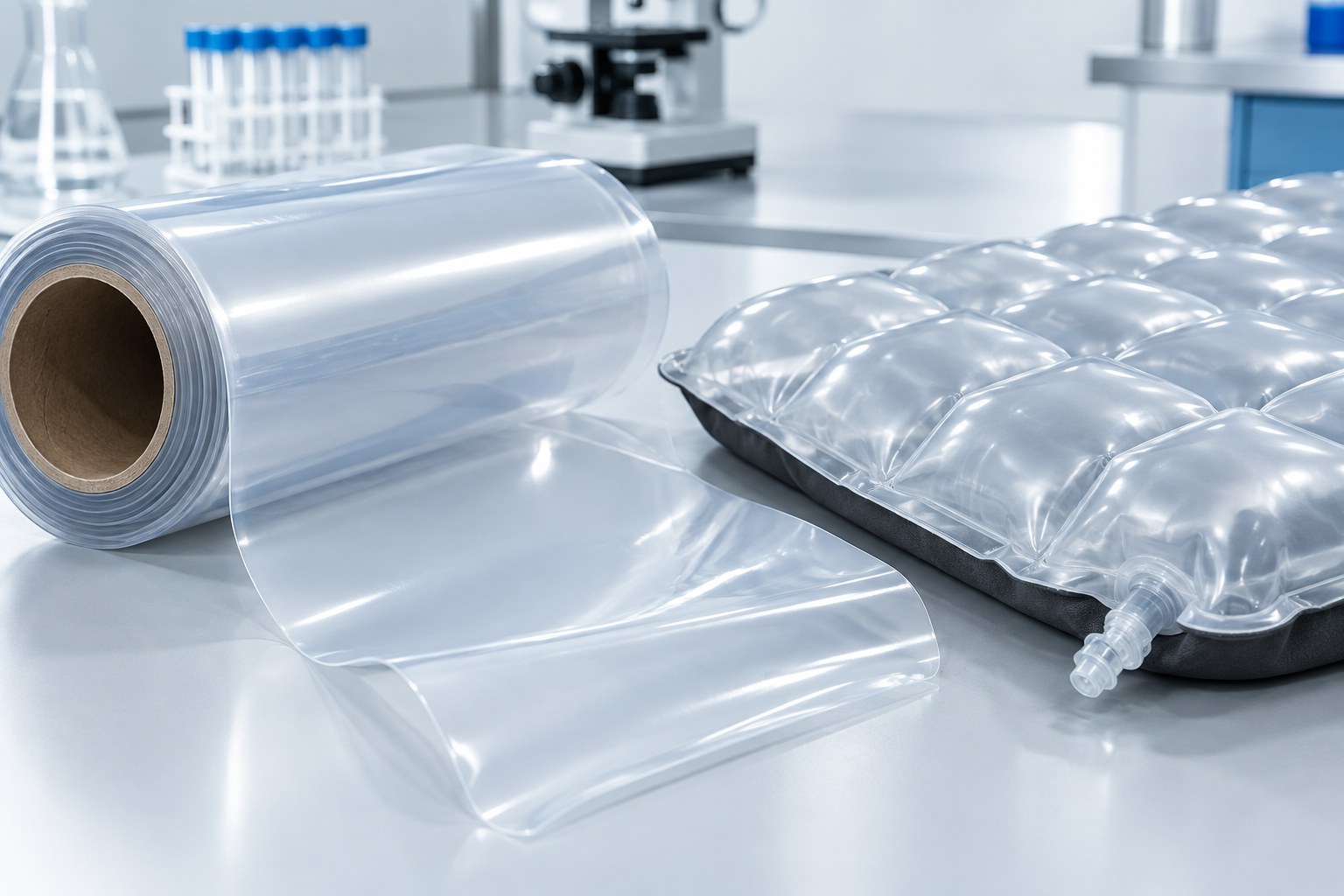
For institutional purchasing, ask about material type, seam construction, hydrolysis resistance where relevant and expected usage conditions.
4. Evaluate adjustability
- How is inflation adjusted?
- Can staff learn the adjustment process quickly?
- Is there a clear inspection method?
- What happens if the cushion loses air?
5. Evaluate the cover
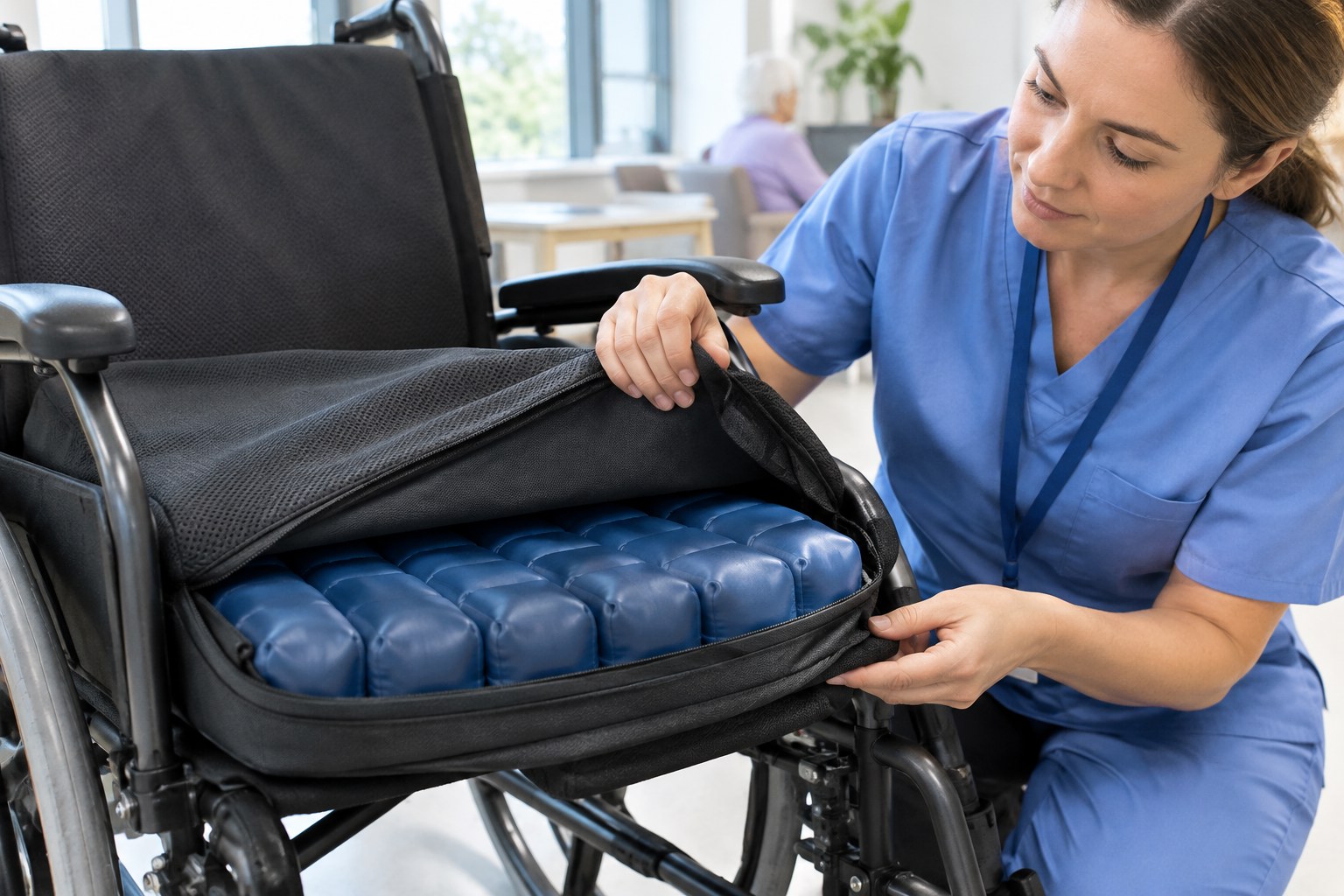
Check fabric, cleaning instructions, closure design, replacement availability and suitability for the facility’s routine.
6. Compare suppliers, not just products
| Supplier factor | Questions to ask |
|---|---|
| Manufacturing | Is the supplier a manufacturer or trading company? |
| Customization | Can dimensions, labels, packaging or specifications be customized? |
| Quality | What inspections and material controls are used? |
| Documentation | What product and compliance documents can be supplied? |
| Supply | What are MOQ, lead time, capacity and repeat-order conditions? |
For a broader procurement framework, see JFTCARE’s supplier comparison guide.
Buyer checklist
- Application and sitting duration
- Cushion size and wheelchair compatibility
- Air-cell design
- Material and durability
- Cover and cleaning
- Adjustment procedure
- Quality and documentation
- MOQ and lead time
- OEM/private-label requirements
Key takeaway
A facility-ready air-cell cushion combines product design, maintenance practicality, documentation and dependable supply.
FAQ
Should facilities buy the cheapest air-cell cushion?
Unit price is only one procurement variable. Facilities should compare the full specification, service life, maintenance requirements, documentation and supplier support.



Leave a Reply