

Short answer: Facility-wide cushion standardization works best when a community defines a small set of approved specifications while preserving flexibility for residents who need individualized seating solutions.
Why standardize?
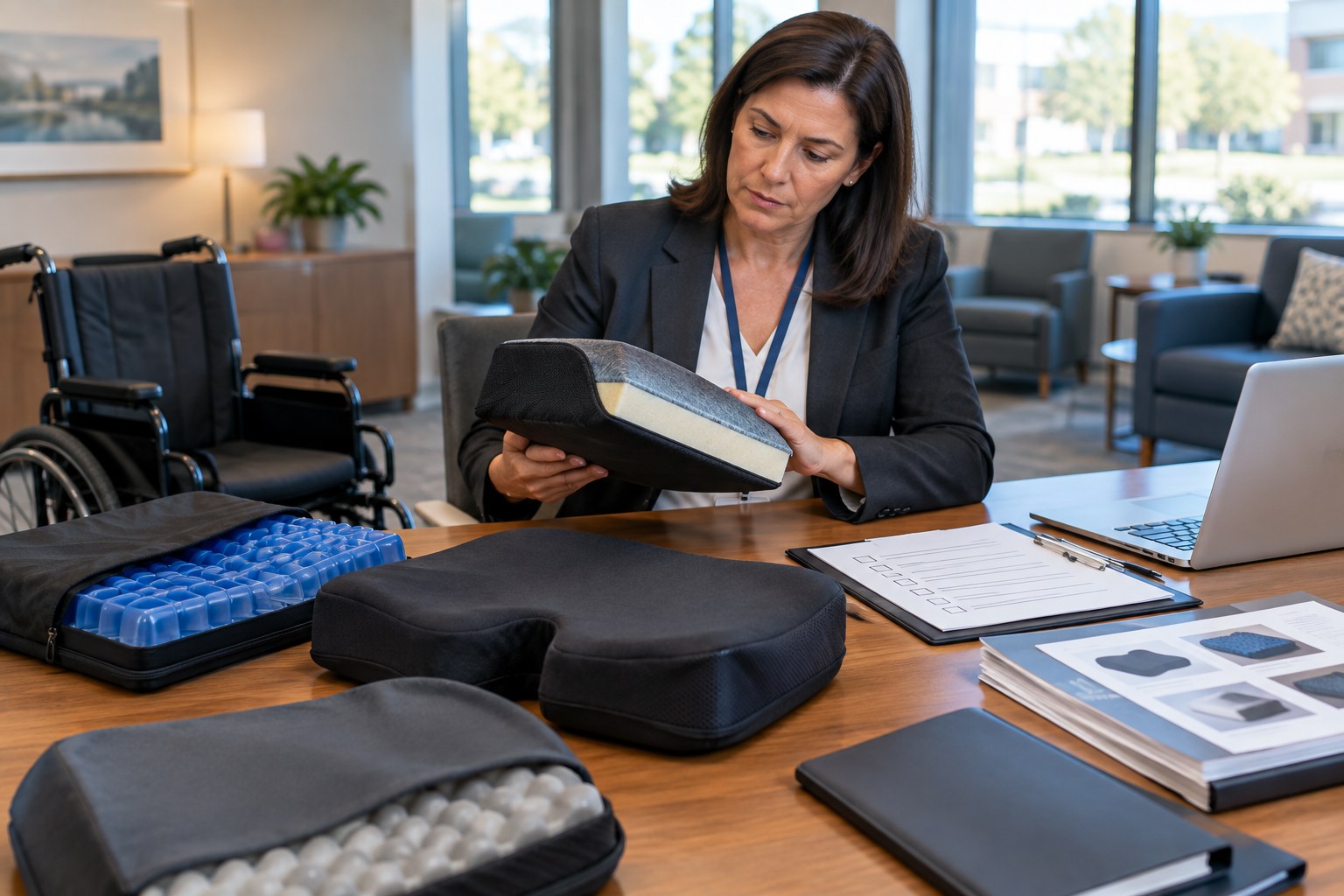
Standardization can simplify staff training, purchasing, inventory, maintenance, documentation and replacement. But one cushion should not automatically be assigned to every resident.
Define the approved product profile
| Specification | Facility decision |
|---|---|
| Primary application | Daily wheelchair seating, occasional use, rehab, etc. |
| Dimensions | Approved size range linked to wheelchair inventory |
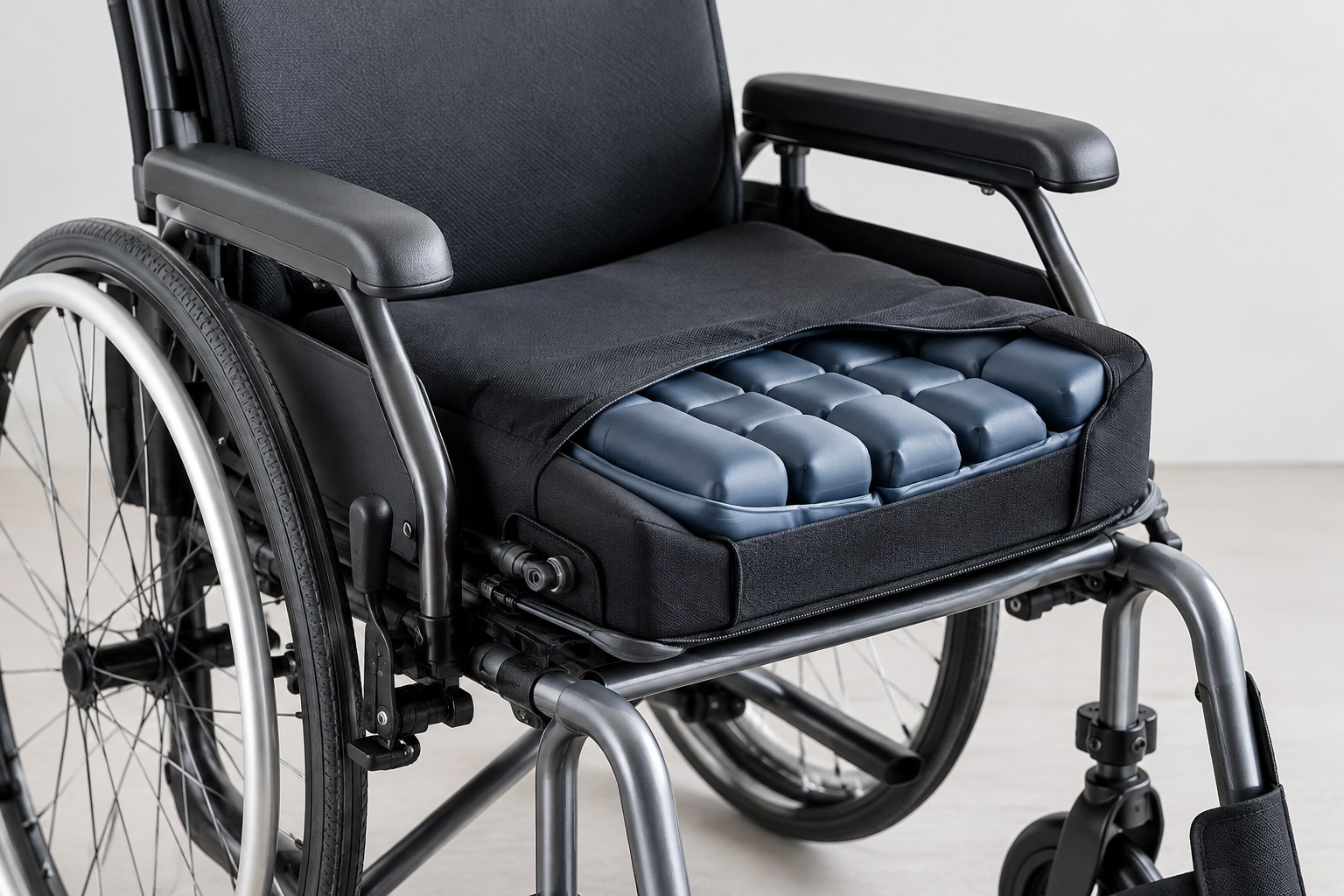
| Technology | Air-cell, foam, gel or other approved categories |
| Cover | Cleaning and replacement requirements |
| Documentation | Required manuals, labels and product records |
| Supplier | Approved source and backup contact |
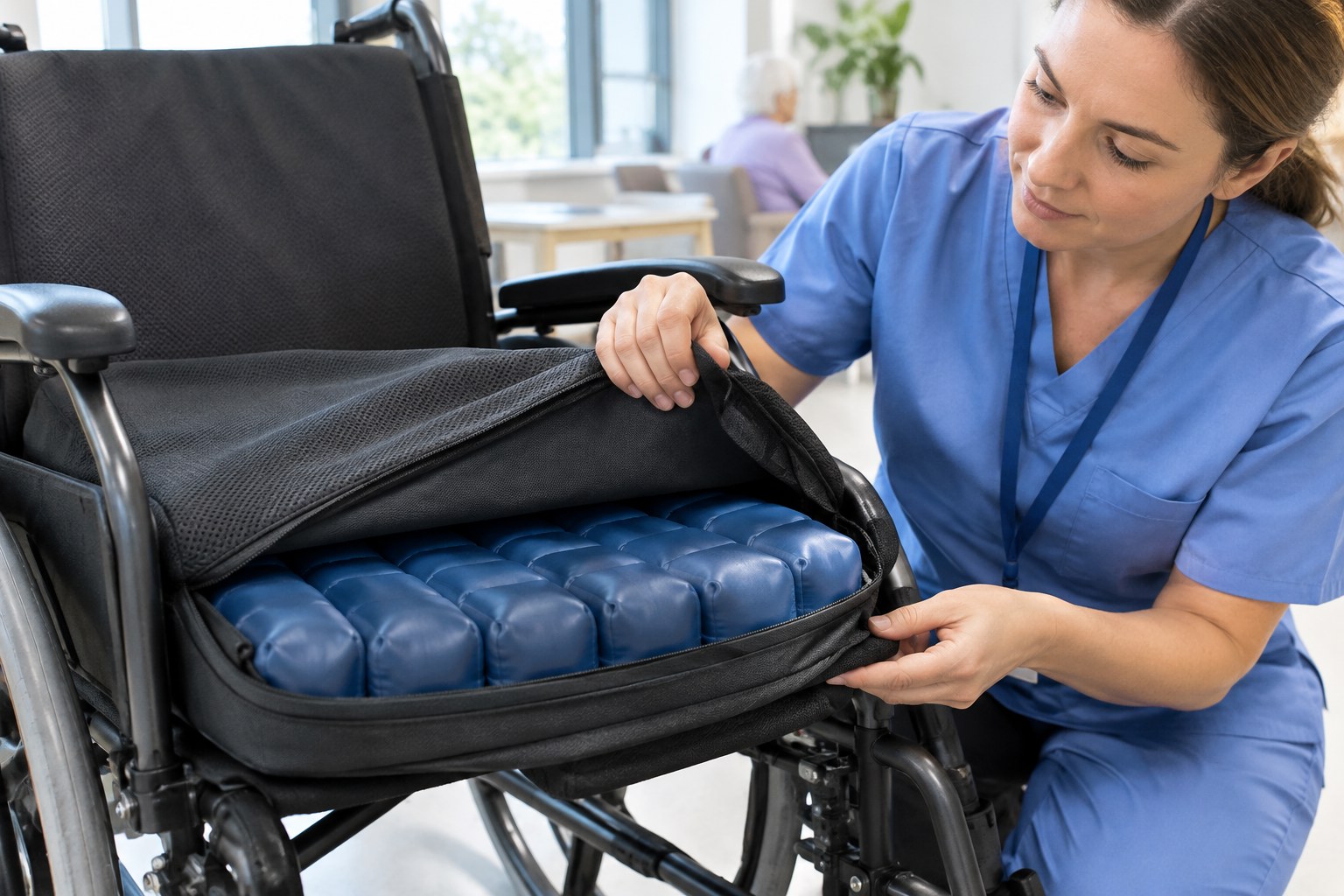
Create a simple staff training card
- Confirm the correct model and size.
- Position it correctly on the wheelchair.
- Follow the manufacturer’s adjustment procedure.
- Check condition during routine inspection.
- Report damage or abnormal air loss.
Connect inventory to resident needs
Instead of stocking one product for everyone, create a small approved portfolio by size or application and establish a process for alternatives when resident needs differ.
Build a replacement trigger
Replacement criteria should be written down. Examples include structural damage, persistent air loss, worn covers, changes in resident needs or manufacturer-recommended replacement conditions.
Use the supplier as part of the system
A supplier should provide consistent specifications, clear product documentation, replacement support and predictable repeat-order communication.
For supplier evaluation, see JFTCARE’s supplier comparison guide.
Key takeaway
Standardization should reduce operational complexity without turning seating into a one-size-fits-all decision.
FAQ
Should every resident use the same pressure relief cushion?
No. Standardization can define approved products and processes, but individual resident needs should determine the final seating solution.




Leave a Reply