

Short answer: An air-cell wheelchair cushion is one component of a pressure-management strategy. It can provide a pressure-redistributing seating surface, but it should be used alongside resident assessment, positioning, mobility, skin inspection and facility protocols.
Start with the resident, not the product
Pressure management begins with understanding mobility, posture, activity, sitting duration, skin condition and ability to reposition. Select the product after these needs are understood.
Where an air-cell cushion can fit
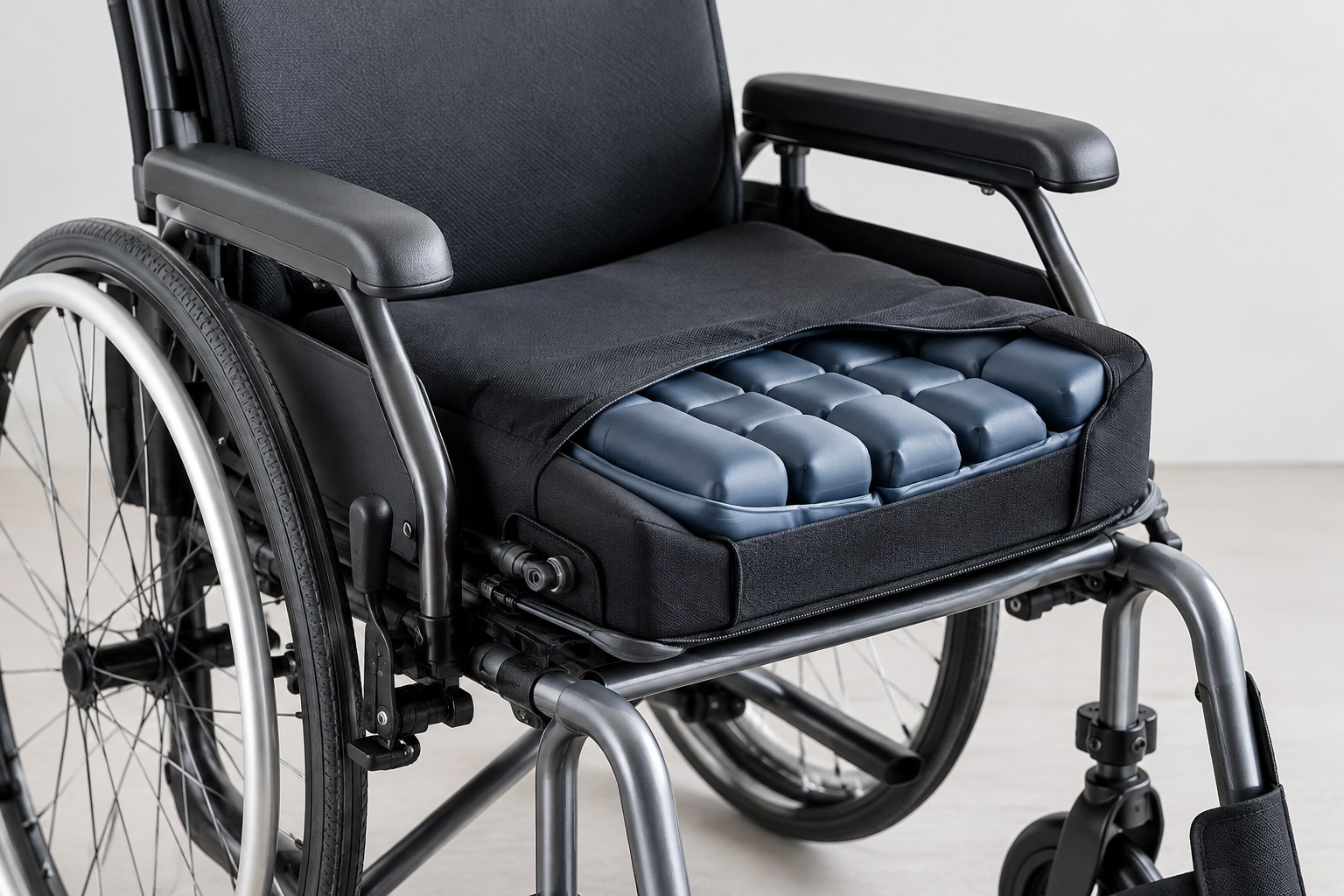
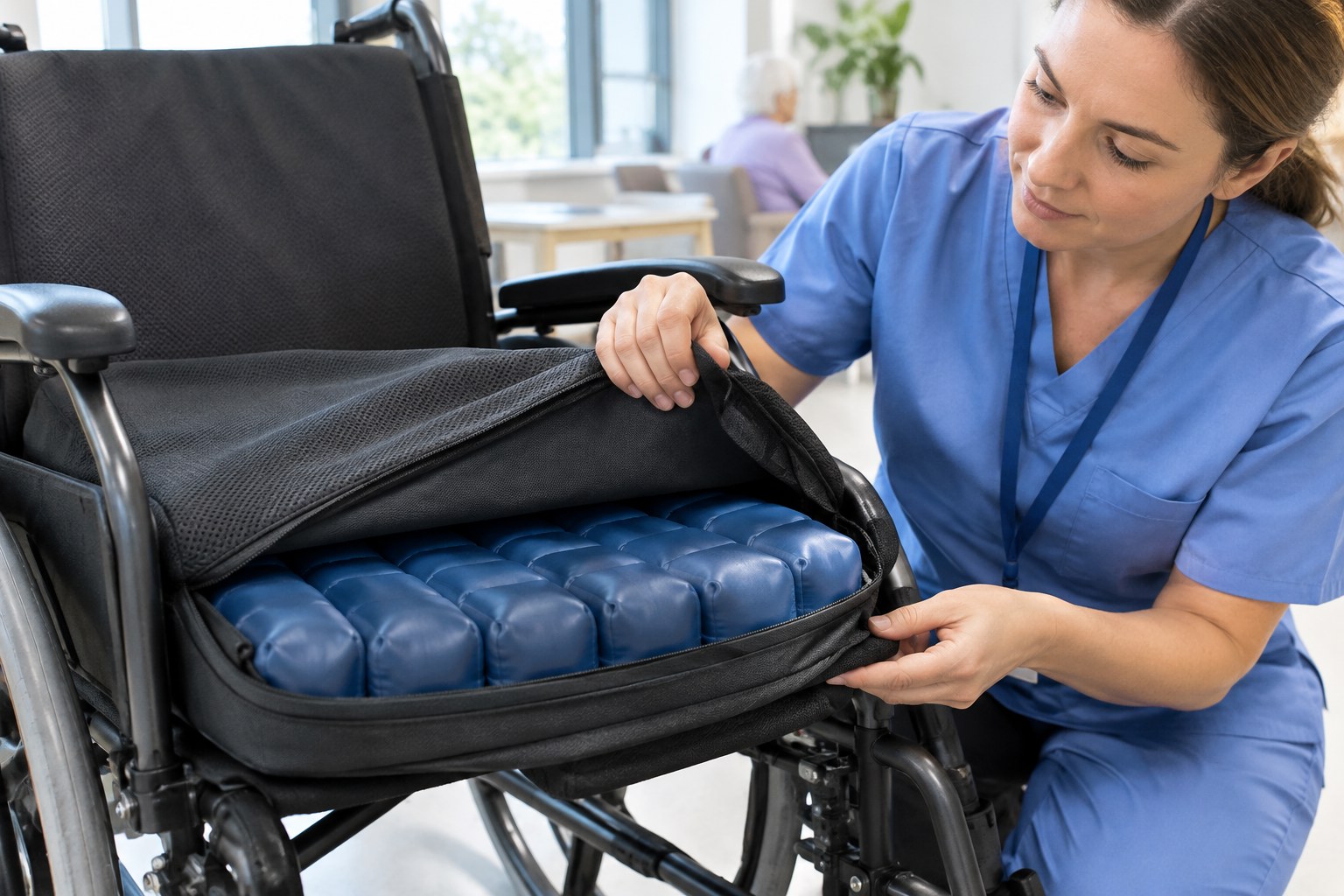
Air-cell seating can be considered when a facility needs an adjustable, portable seating surface for wheelchair users. The cushion’s design, inflation level, dimensions and cover should match the intended application.
Five parts of a complete seating routine
| Part | Facility action |
|---|---|
| Assessment | Understand resident and seating needs. |
| Fit | Match cushion and wheelchair dimensions. |
| Adjustment | Set up according to instructions. |
| Monitoring | Observe seating, skin condition and equipment condition. |
| Reassessment | Review after meaningful changes. |
What air-cell technology does not replace
- Clinical assessment
- Appropriate repositioning and mobility practices
- Skin inspection according to facility protocol
- Correct wheelchair setup
- Professional evaluation when problems are identified
See what a pressure relief wheelchair cushion is and the senior living cushion buyer’s guide.
Key takeaway
The value of an air-cell cushion is best understood as part of a complete seating and pressure-management workflow, not as a substitute for clinical care.
FAQ
Does an air cushion guarantee prevention of pressure injuries?
No. No seating product should be treated as a guarantee. Prevention depends on multiple clinical, behavioral, equipment and care factors.


Leave a Reply