
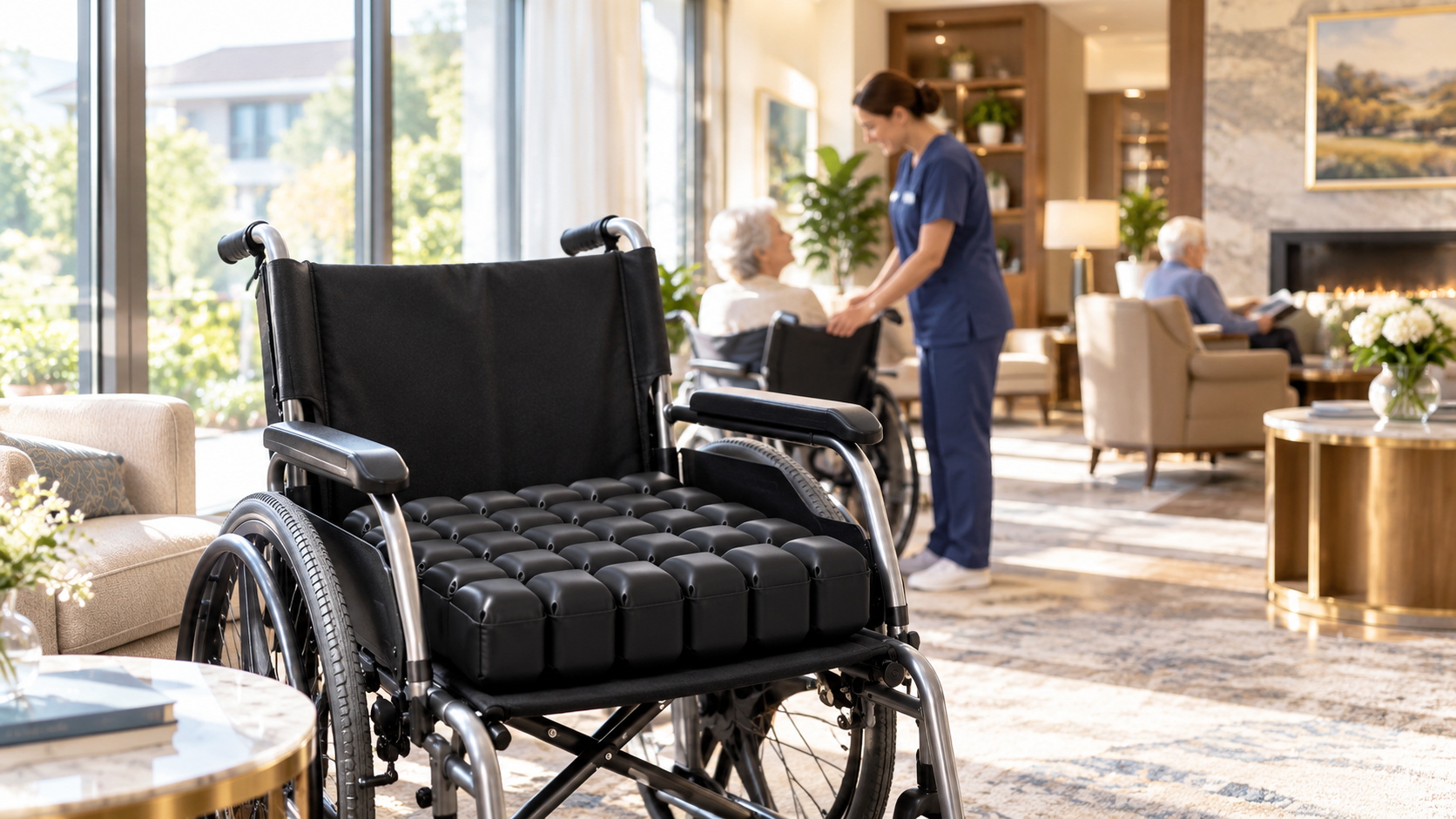
Short answer: A pressure relief wheelchair cushion for a nursing home should be evaluated as part of the resident’s seating system—not by softness or price alone. Buyers should check fit, intended use, pressure-management design, stability, maintenance, durability, cleaning, and supplier support before placing a bulk order.
8 questions to ask before buying
1. How many hours will the resident typically remain seated?
Start with the actual use case. A resident who spends much of the day in a wheelchair may need a different seating solution from someone who uses a wheelchair only for transfers or short periods. Document typical sitting duration, repositioning routines, and the type of wheelchair used.
2. Does the cushion fit the wheelchair correctly?
Check cushion width, depth, thickness, attachment method, and compatibility with the wheelchair seat. A cushion that is too large, too small or poorly secured can affect stability and positioning.
3. How is pressure redistributed?
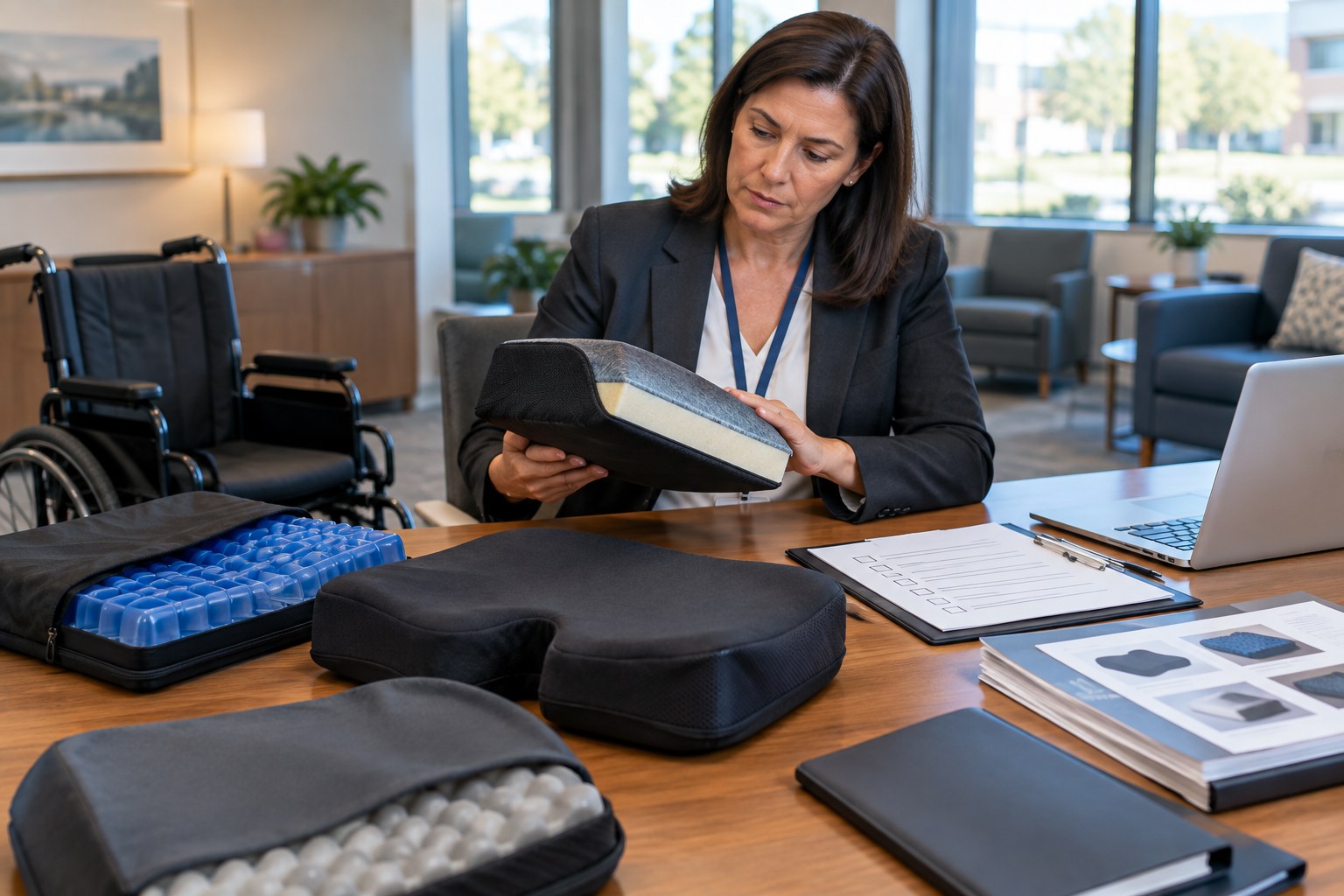
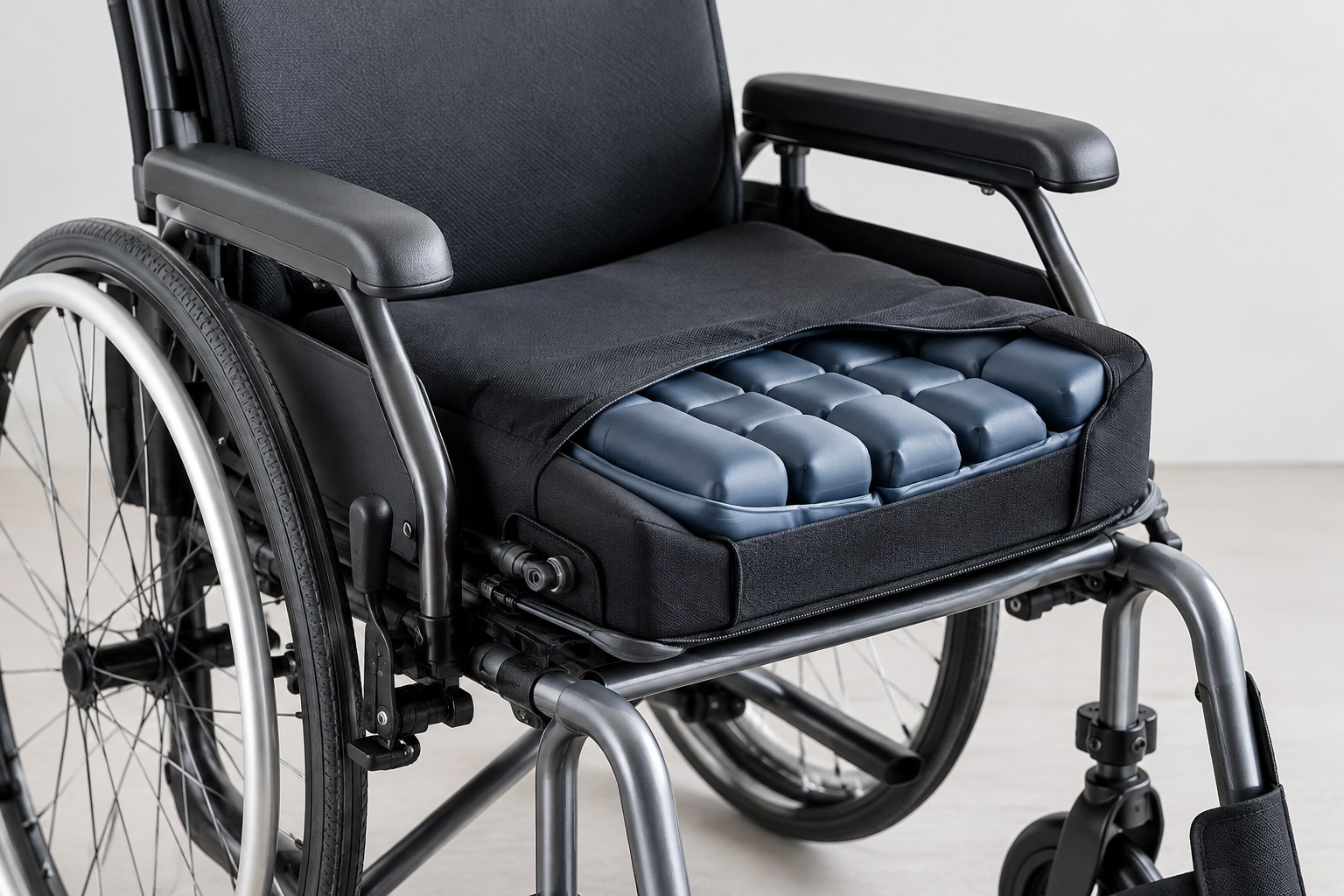
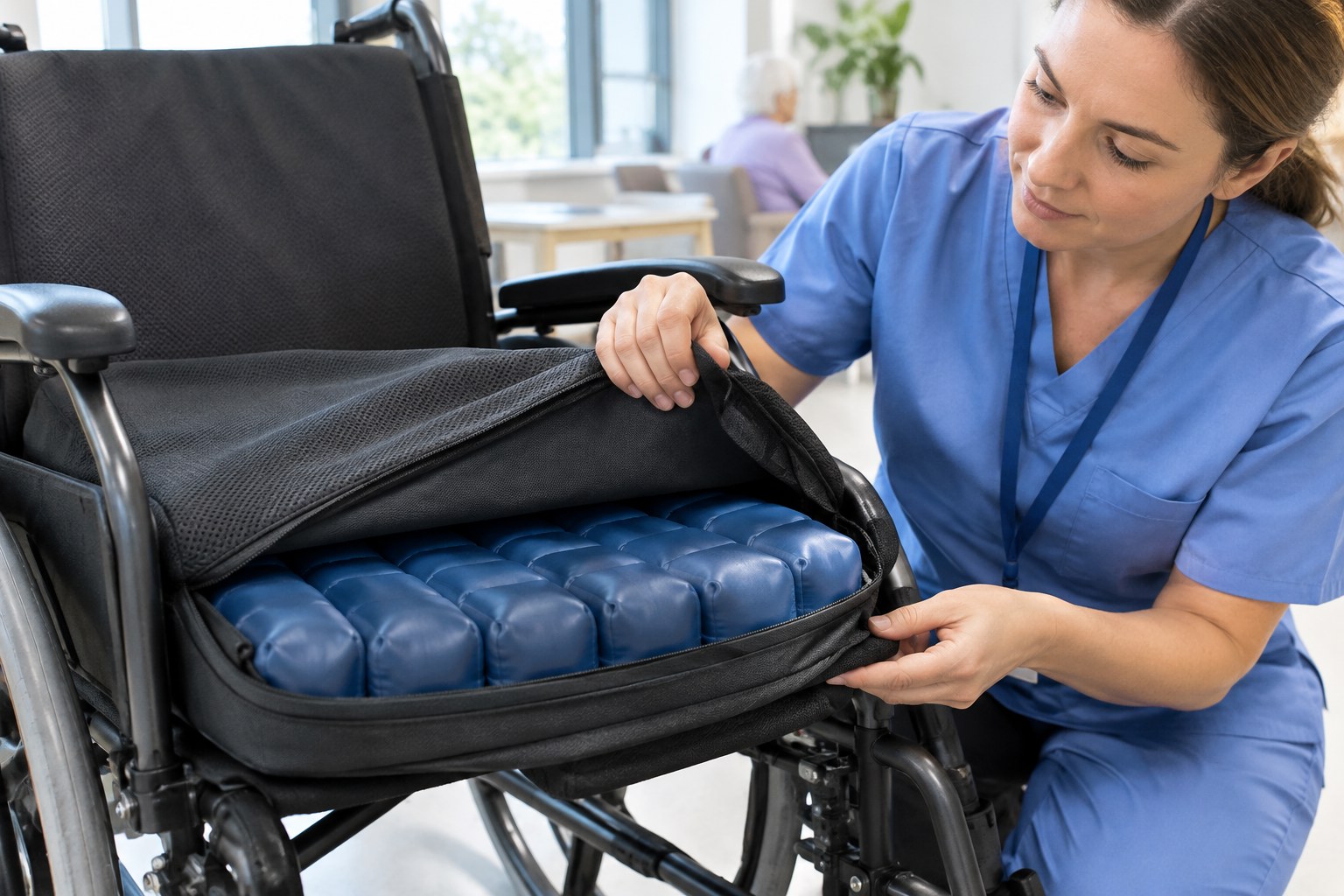
Ask the supplier to explain the technology in plain language. Air-cell cushions use air-filled cells to distribute load across the seating surface. Foam and gel cushions use different mechanisms. The important procurement question is not simply “Which is softer?” but “How does this design manage seated pressure for the intended user?”
4. What adjustment does the user or caregiver need to make?
For an air-cell cushion, ask how inflation is adjusted, how the correct setting is identified, and what happens if the cushion loses air. A facility should be able to train caregivers on routine setup and inspection.
5. What are the cleaning and maintenance requirements?
Ask about the cover material, cleaning method, drying requirements, inspection points, and replacement parts. For multi-resident environments, simple maintenance can reduce operational friction.
6. What are the product’s verified specifications?
Request a specification sheet covering dimensions, weight capacity, materials, cushion structure, inflation system and included accessories. Use the same checklist for every supplier so the comparison is meaningful.
7. Can the supplier support a trial before a bulk order?
A small evaluation order can help a facility check fit, setup, caregiver usability and resident comfort before standardizing a product. Ask how samples are handled and what information the supplier needs to recommend the appropriate configuration.
8. Can the supplier support the facility after the purchase?
For B2B procurement, supplier support matters beyond the first shipment. Ask about documentation, replacement parts, quality issues, response time, OEM/private-label capability, and production capacity if the product will become part of a recurring program.
Quick procurement checklist
| Item | What to verify |
|---|---|
| Fit | Width, depth, thickness, and wheelchair compatibility |
| Pressure management | How the cushion redistributes seated load |
| Adjustment | Inflation or positioning procedure and caregiver training |
| Maintenance | Cleaning, inspection and replacement requirements |
| Specifications | Dimensions, materials, load capacity and included components |
| Supply | Sample process, MOQ, lead time and production capacity |
| Documentation | Product specifications, test reports and applicable compliance documents |
Where JFTCARE fits

JFTCARE is the brand of Dongguan Jiashuan Industrial Co., Ltd., a China-based manufacturer serving B2B buyers with pressure-relief seating and related senior-care products. For facilities, distributors and healthcare brands evaluating air-cell seating, the JFTCARE OEM air-cell cushion page provides an overview of the manufacturer and its OEM/private-label positioning.
For a broader comparison, see air vs. gel vs. foam pressure-relief technologies.
FAQ
Is a softer wheelchair cushion always better?
No. Cushion selection involves pressure management, stability, positioning, fit, maintenance, and the resident’s needs. Softness alone is not a sufficient procurement criterion.
Should a nursing home test cushions before a bulk order?
A controlled trial can help the facility evaluate fit, setup and caregiver usability before standardizing a product, subject to its own clinical and procurement procedures.
Updated October 2026. Product selection should be based on the individual resident, wheelchair configuration and the facility’s clinical and risk-management procedures.


Leave a Reply